


A few days ago, I was chatting with a friend who makes monitors. He said something that left a deep impression on me: "Buying a panel is convenient now, but it's even more troublesome to incorporate a screen into my product
This sounds a bit counterintuitive. The panel production capacity is almost fully covered by China, why bother?
1、 70%, the Chinese panel has really won
Let's first look at a set of numbers.
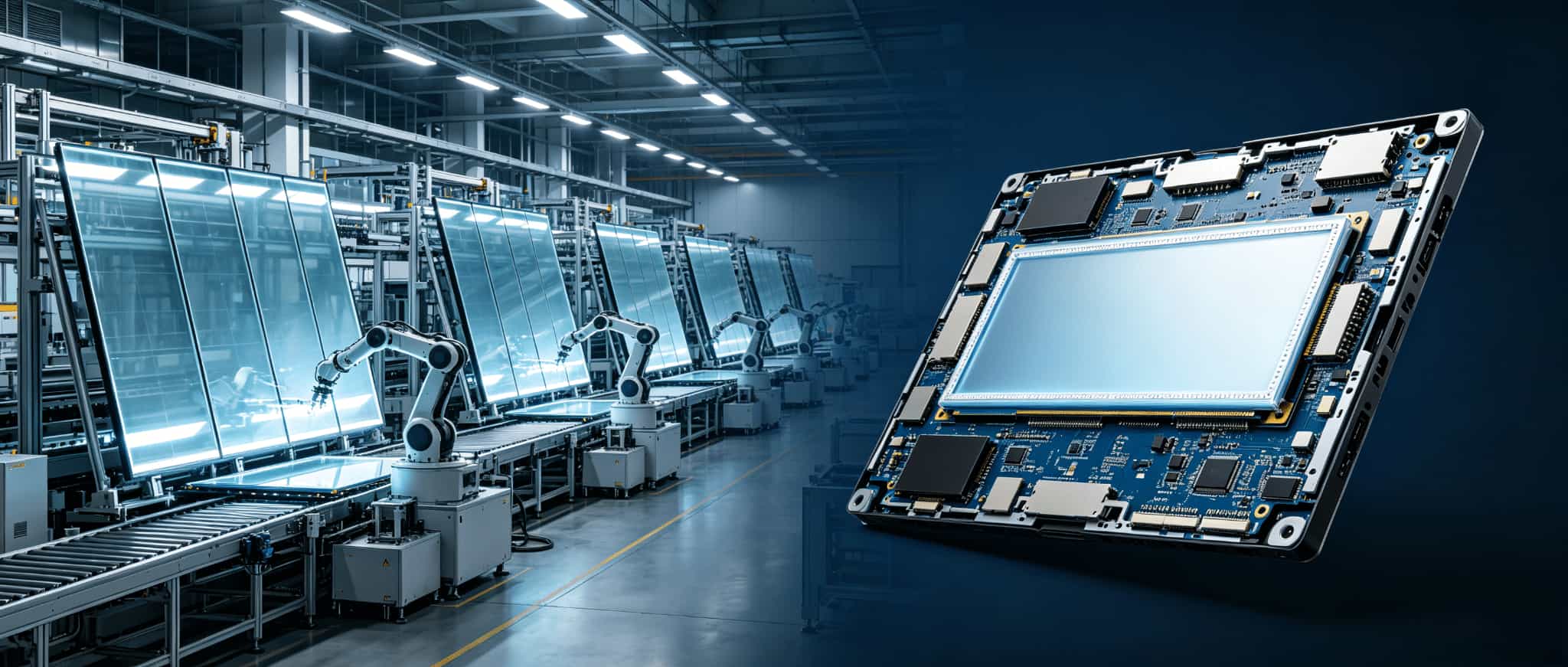
Global LCD panel production capacity by 2026It is estimated to reach 380 million square meters, the proportion of Chinese MainlandIt has already exceeded 70%.
In the display panel market, the market share of land-based manufacturers has reached 68% by 2025,It is expected to further increase to 72% by 2026.
To put it bluntly, China is already in the LCD panel raceThe winner takes all "The game is over.
But the problem is that if the panel wins, it doesn't mean that the terminal manufacturer is relieved.
2、 The panel is a rough house, the module is a refined decoration
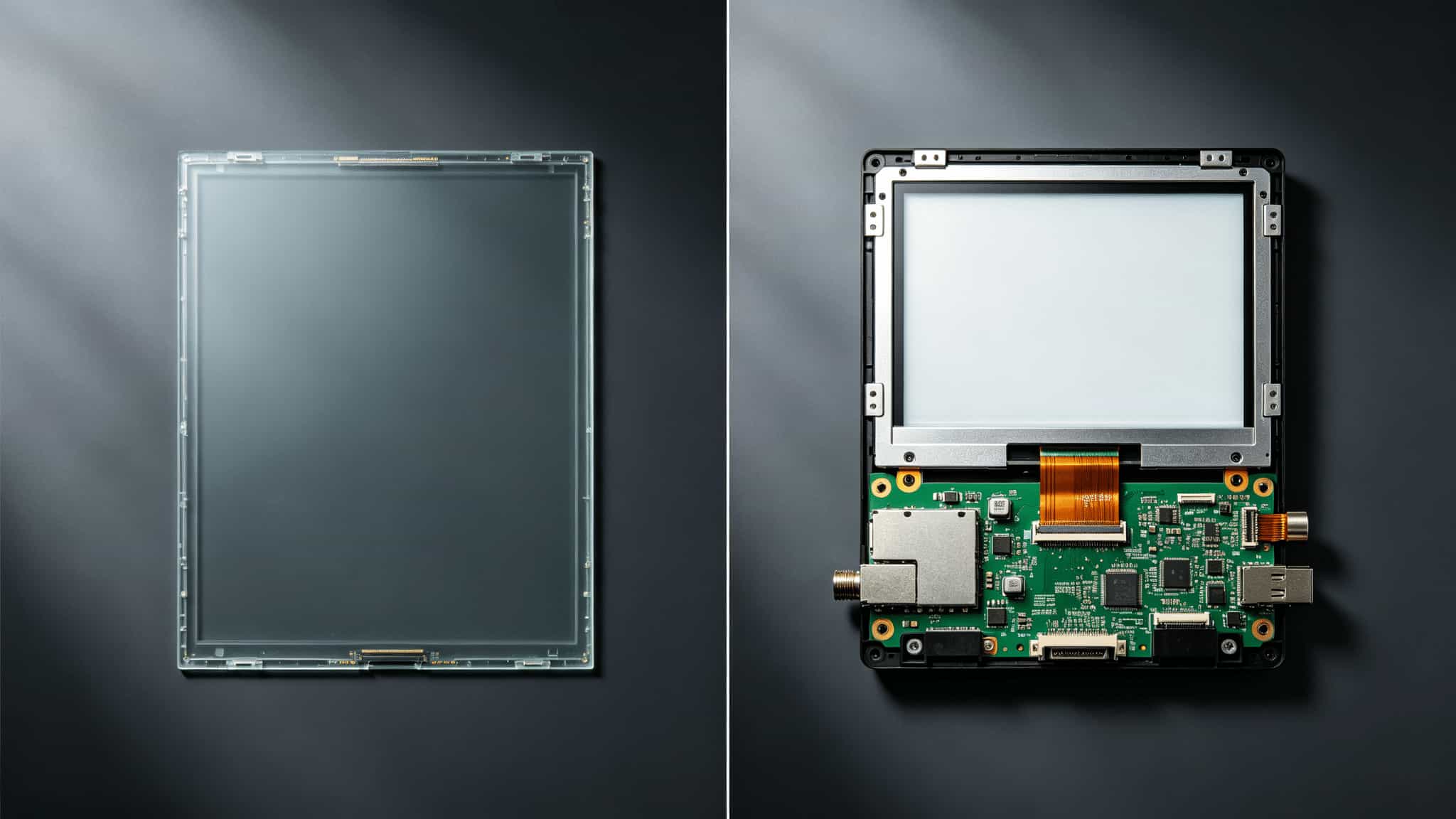
Many friends who make monitors, laptops, and advertising machines should have a deep understanding: when you get a panel, it is just a piece of glass with a circuit, and it is still far from being installed in your product.
Should the backlight be adjusted? How to design the border? Can the interface be modified? How to integrate touch control? Should brightness, color temperature, and viewing angle be customized? Can the working temperature range be wider?
These issues are basically ignored by panel factories. They are engaged in standardized and large-scale business.
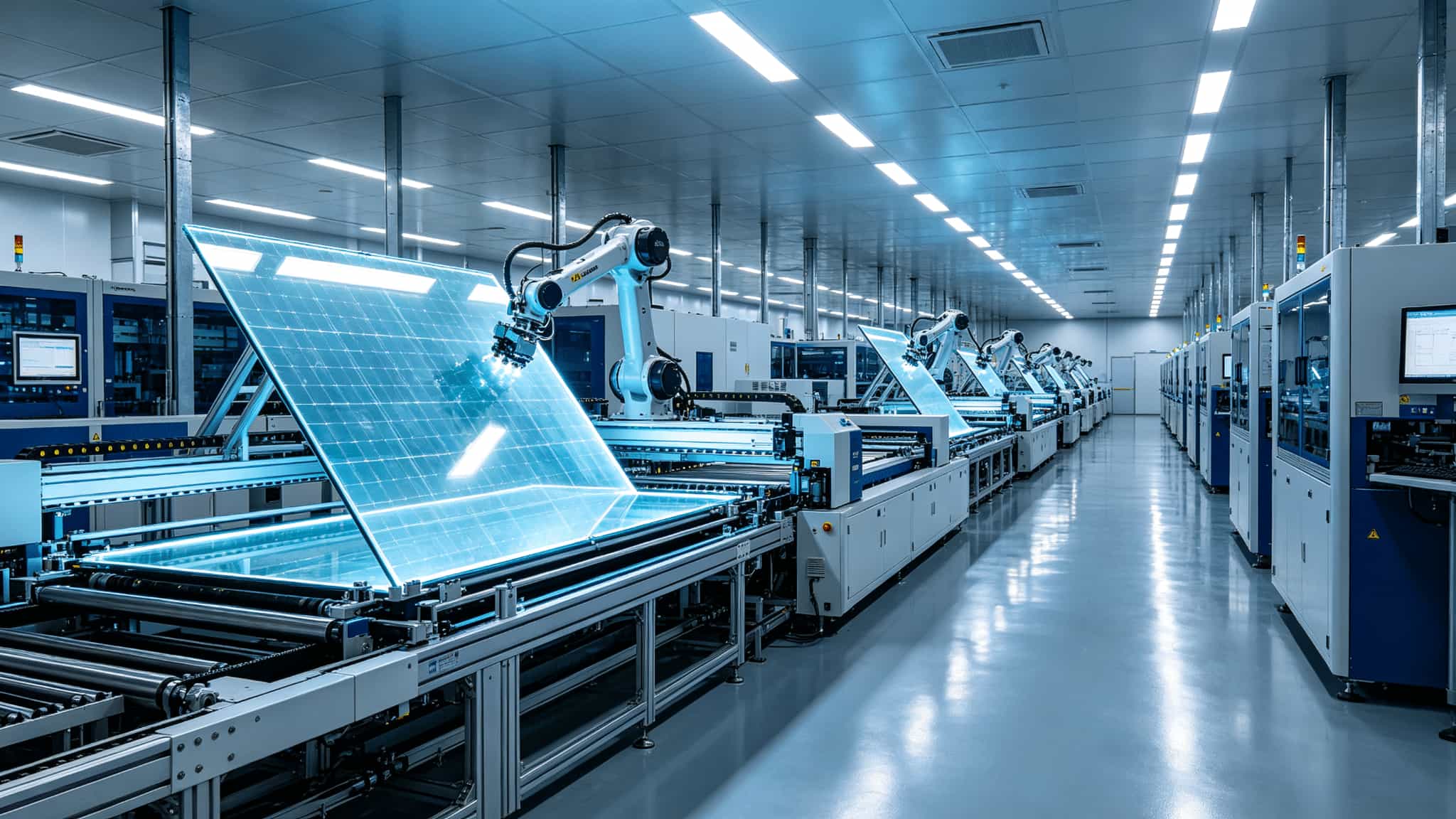
A 10.5-generation production line has a monthly capacity of 150000 pieces and an annual demand for over 5 million sets of backlight modules. With this volume, panel manufacturers do not have the time to accompany you in changing specifications one by one.
And module manufacturers are doing this' fine decoration 'job.
Liquid crystal display module (LCM) is simply a combination of LCD panel, driver IC, backlight, circuit board, and other componentsInstall a display unit that can be directly used.
But it's simple to say,It's all about details when it comes to making it.Different external dimensions, interface protocols, brightness requirements, and operating temperature ranges.
The global LCD module market size has reached $58.7 billion by 2025 and is expected to exceed $62.5 billion by 2026.
More importantly, in terms of customized display modules,The compound annual growth rate from 2026 to 2035 is expected to be between 7% and 9%.
By 2026, the entire customized LCD display market is expected to reach 92.84 billion US dollars.
What does this growth rate indicate? More and more terminal manufacturers are realizing that instead of buying a standard panel and tinkering with it themselves,It's better to directly find a module factory to customize a "just right" screen.
3、 Why is it just like being big and everything is more important?
I'll give you an example and you'll understand.
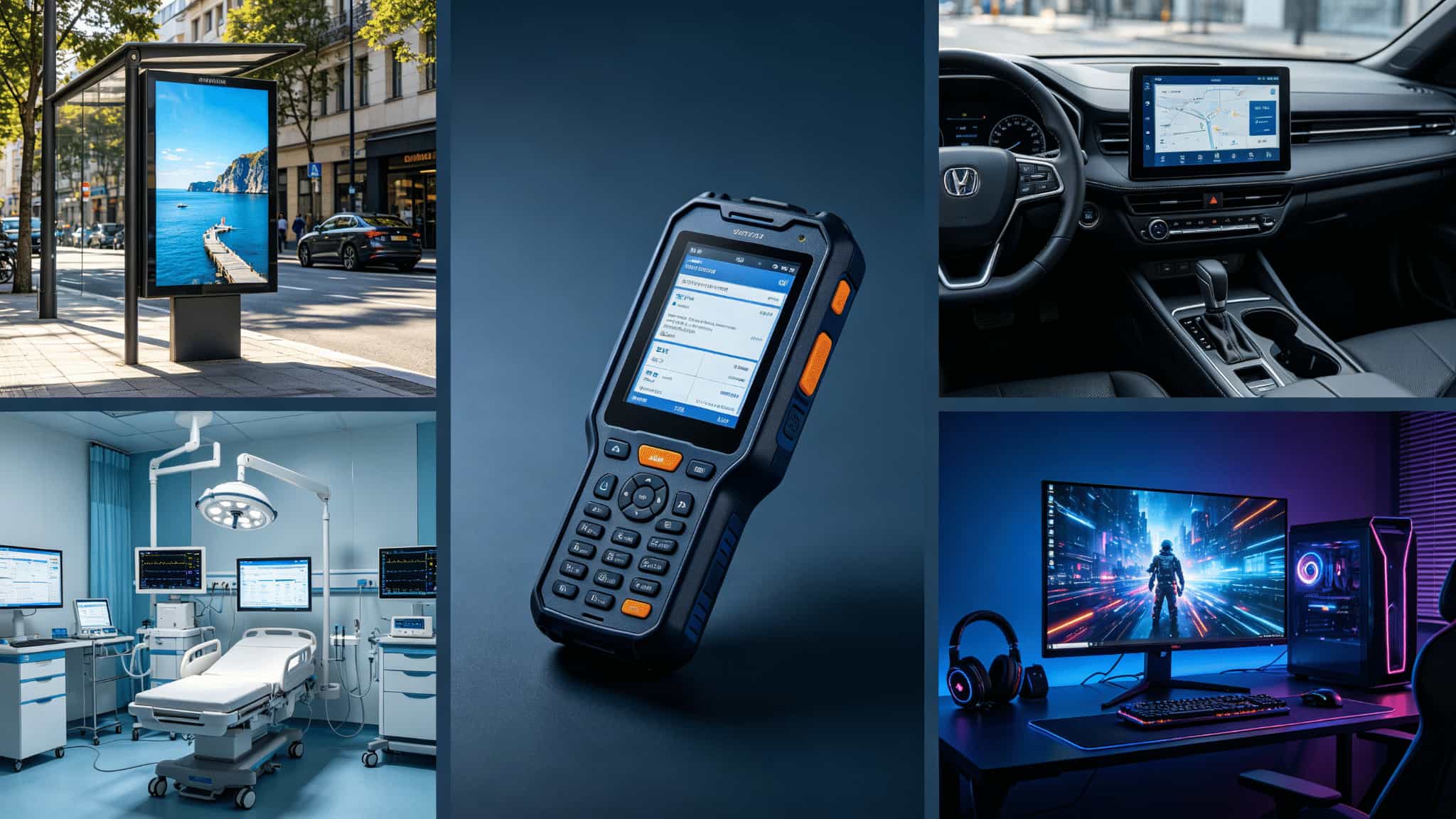
You make an outdoor advertising machine,It needs to be visible in the sunlight. The brightness of a regular panel is about 250-300nit, making it impossible to see under sunlight.
You need a high brightness screen of 1000nit or even 1500nit.The panel factory does not produce this non-standard product, but the module factory can replace the backlight, adjust the optical film, and change the driver. With a set of combination punches, the brightness will increase.
For example, if you create a car center console,In summer, the temperature inside the car can reach 70 ℃, and in winter, it is common for the temperature to drop below 30 ℃ in the north.
The working range of ordinary panels from 0 to 50 ℃ cannot withstand it at all.The module factory is capable of wide temperature design and can operate stably from -30 ℃ to 80 ℃.
Laptop manufacturers also want an ultra-thin, low-power screen;Esports monitors want high refresh rates; Medical equipment needs high color accuracy... These "non-standard" requirements are not met by panel manufacturers, but module manufacturers can.
The panel factory focuses on scaling from 1 to N, while the module factory focuses on customization from 0 to 1.
4、 What is Saishida doing?
We are a manufacturer of LCM LCD display modules, with sizes ranging from 10.1 inches to 32 inches.
Modules ranging from 10.1 to 16 inches are mainly used for industrial handheld devices, educational laptops, and car systems.These scenarios require high reliability, including wide temperature range, high brightness, and earthquake resistance.
Modules ranging from 18.5 to 27 inches are mainly designed for display brands and integrated commercial displays.The requirements for refresh rate, resolution, and interface vary in different scenarios such as office, esports, finance, and retail.
The 31.5-inch module is designed for professional creators and high-end esports players,Large screen, high color gamut, immersive experience.
What is the difference between us and panel factories? The panel factory sells you a piece of glass,We will provide you with a 'directly usable display solution' during the competition.
Backlight border LCD module, integrated with our Saishi Danone,We can grind with you any size, interface, brightness, or temperature range you need.
To put it simply, the panel factory sells whatever they have, while our Saishida sells whatever you want.
5、 A practical suggestion for terminal manufacturers
If you are working on a monitor, laptop, advertising machine, or any terminal device with a screen, there are a few things you can think about:
Firstly, don't just focus on the panel specification sheet.The parameters on the specification sheet are ideal, whether they can run steadily when installed in your product is another matter. Finding a partner who understands mods is much more convenient than just gnawing on specifications alone.
Secondly, customization may not necessarily be more expensive than standard products.Many people think customization is expensive, but it's not necessarily the case. Appropriate size, interface, and backlight can help you save a lot of trouble in structural design, making it more cost-effective to calculate the overall cost.
Thirdly, it is important to find a module factory as early as possible.Don't wait until the product is almost finalized to remember that the screen hasn't landed yet. The earlier you intervene, the more pitfalls the module factory can help you avoid.
Say one more sentence afterwards
It is a fact that Chinese panels have won production capacity. But the victory of production capacity is only in the first half.
The second half of the game belongs to those who can turn a panel into a true "organ" of a device.
The panel is the heart, while the module consists of blood vessels and nerves. No matter how strong the heart is, if the blood vessels are blocked, the equipment cannot run.
And this is precisely the opportunity for module manufacturers, and it is also your opportunity.
(If you are making products with screens, welcome to talk about your needs. From 10.1 to 32 inches, from -30 ℃ to 80 ℃, from 250nit to 10000nit, let's adjust this screen to just right.)
#LCD # Display Panel # Customization # Display Module # LCD Display Module # Terminal Manufacturer # Supply Chain # LCM # National Factory Replacement # Production Capacity