


Recently, I heard a customer who works as an outdoor advertising machine talk about their experience of screen selection and pitfalls. He said, "There was a batch of equipment sold to Northeast China before, and when the outdoor temperature dropped in winter, the screens went completely black. The customer called and cursed, saying that your equipment was paper paste
He said he chose a regular consumer grade screen from other companies on the market at that time, thinking that there was not much difference between indoor and outdoor, so he followed the conventional configuration.
Later, we switched to our industrial grade solution. In the same location, last winter it was over minus twenty degrees Celsius and nothing happened.
He added later, "If we had selected according to the scene earlier, we wouldn't have wasted a year of after-sales service
Almost. These three words may be expensive pitfalls that device manufacturers have stepped into in screen selection.
I won't talk about anything virtual today,Let's explain the difference between consumer grade LCD screens and industrial grade LCD screens at once.After reading this article, at least you won't pay for 'almost' anymore.
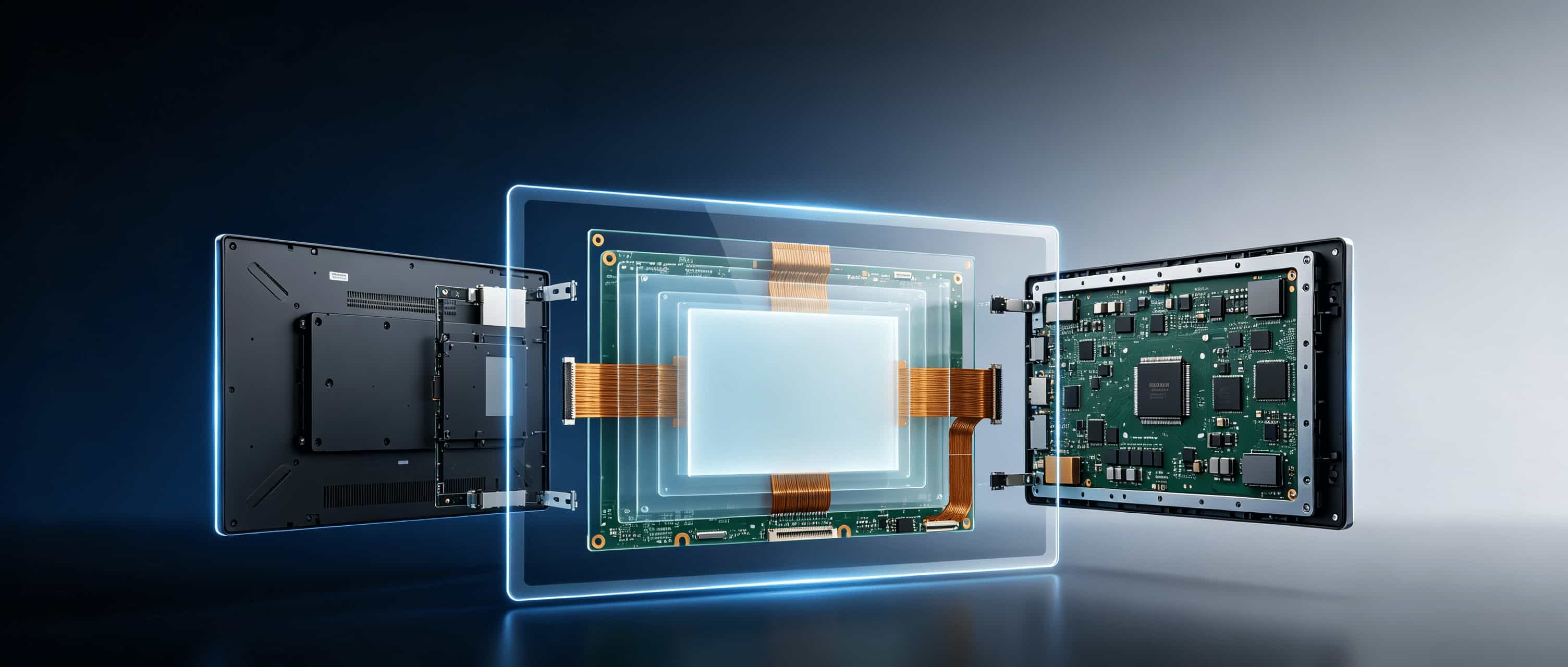
1、 First, break a cognitive misconception
Many people think that industrial grade screens have higher resolution, brighter colors, and faster refresh rates, but that's not true.
Consumer grade screens are designed to look good and be cheap.Colorful, lightweight, fashionable, and affordable. The design lifespan is usually 3 to 5 years, suitable for indoor constant temperature and daily use for several hours.
Industrial grade screens are designed to be 'durable and reliable'.It must ensure stable output even in environments with extreme temperatures, vibrations, dust, and uninterrupted operation around the clock.
Summary in one sentence: stunning at first glance in consumer level competition, and steadfast in the second moment in industrial level competition.
Okay, let's put this cognition here for now. From six practical dimensions,I pried and crushed the gap between the two screens once to see it clearly.
2、 Six dimensions, understanding the real gap
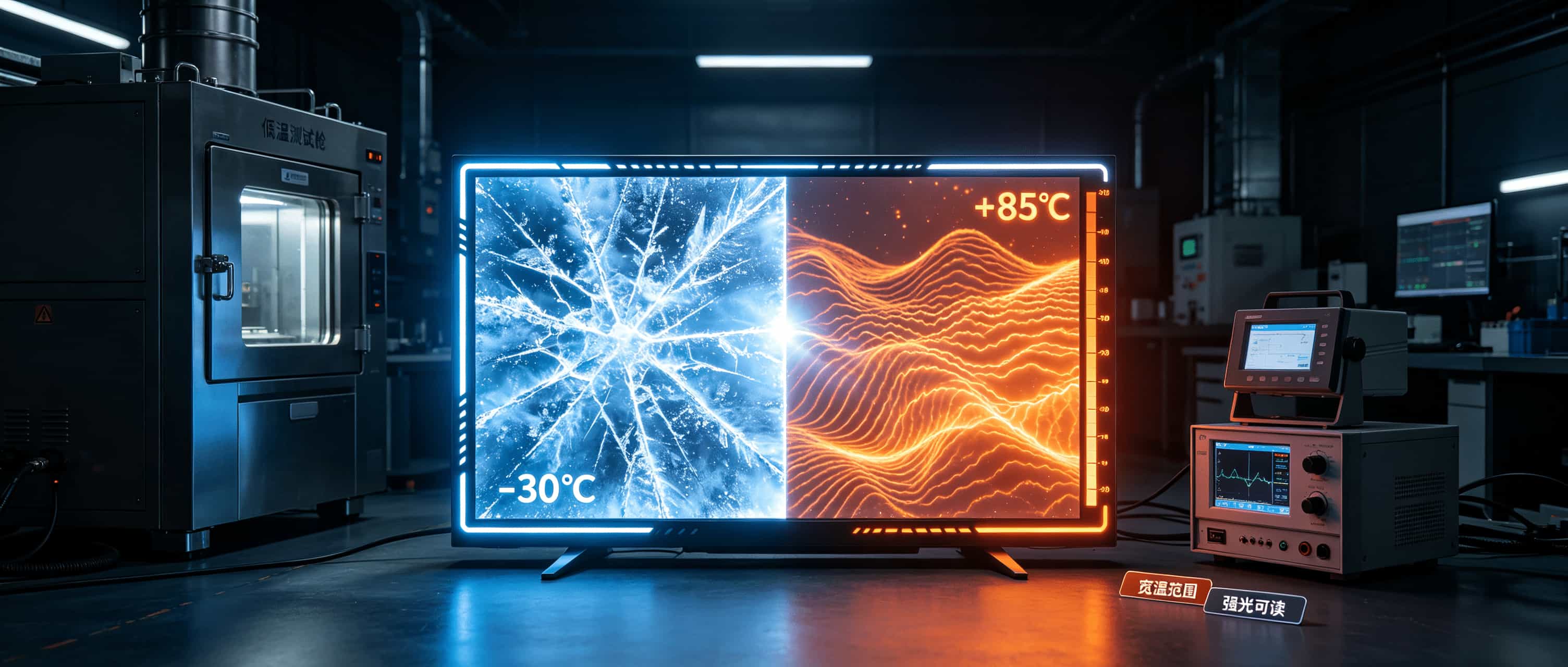
① Working temperature
Consumer grade LCD screenThe official nominal working temperature is usually between 0 ℃ and 50 ℃. In winter in the north, when the temperature drops to minus ten degrees Celsius outdoors, it goes on strike directly.
Industrial grade LCD screenIt can achieve temperatures ranging from -30 ℃ to 85 ℃, and some high specification products even cover temperatures ranging from -40 ℃ to 85 ℃. The screen you see on outdoor billboards in Harbin is most likely of industrial grade.
② Brightness
Consumer grade displays typically have a brightness range of 250 to 300 nits,Indoors are sufficient, but when placed under the sun, it becomes difficult to see clearly.
Industrial grade can achieve a brightness of over 1000 nits in outdoor strong light environments.It's not that it doesn't want to save electricity, it's that it needs to be visible even in the sun.
③ Backlight lifespan
The lifespan of consumer grade screen backlighting is generally between 10000 to 30000 hours. Driving for 8 hours a day can last for approximately 3 to 5 years.
Industrial grade typically requires 50000 to 100000 hours or more. Running continuously throughout the day, it can also withstand 5 to 10 years.
④ Protective capability
Consumer grade products generally do not have special protective designs and are only suitable for indoor clean environments.
Industrial grade should consider dust, moisture, vibration, and electromagnetic interference resistance.We have to withstand factory dust, workshop oil pollution, and outdoor wind and rain.
⑤ Design lifespan
Consumer grade design has a lifespan of 3 to 5 years, which perfectly matches the pace of consumer electronics product upgrades.
The industrial grade design has a lifespan of 7 to 10 years or more, with some reaching up to 15 years. What equipment manufacturers want is "usable", not "good-looking parameters".
3、 A real case: Choosing the wrong screen, what is the cost
After talking about so many differences, you may feel that 'the difference is not that serious at all'. Then I'll tell you a true story that happened.
Last year, a customer who specializes in industrial HMI (Human Machine Interface) approached us. He said he used a batch of consumer grade screens as production line equipment before, and the price was indeed cheap, saving dozens of yuan per screen.
As a result, the equipment was delivered in less than half a year, and problems occurred one after another: frequent screen flashing in the high-temperature environment of the production line, touch failure caused by workshop dust, and customers in the north reported black screens when starting up in winter.
The after-sales team runs nationwide, replacing screens, offering compensation, and bearing customer downtime losses.
In the latter calculation, the saved procurement costs are not even enough to cover the after-sales travel expenses.
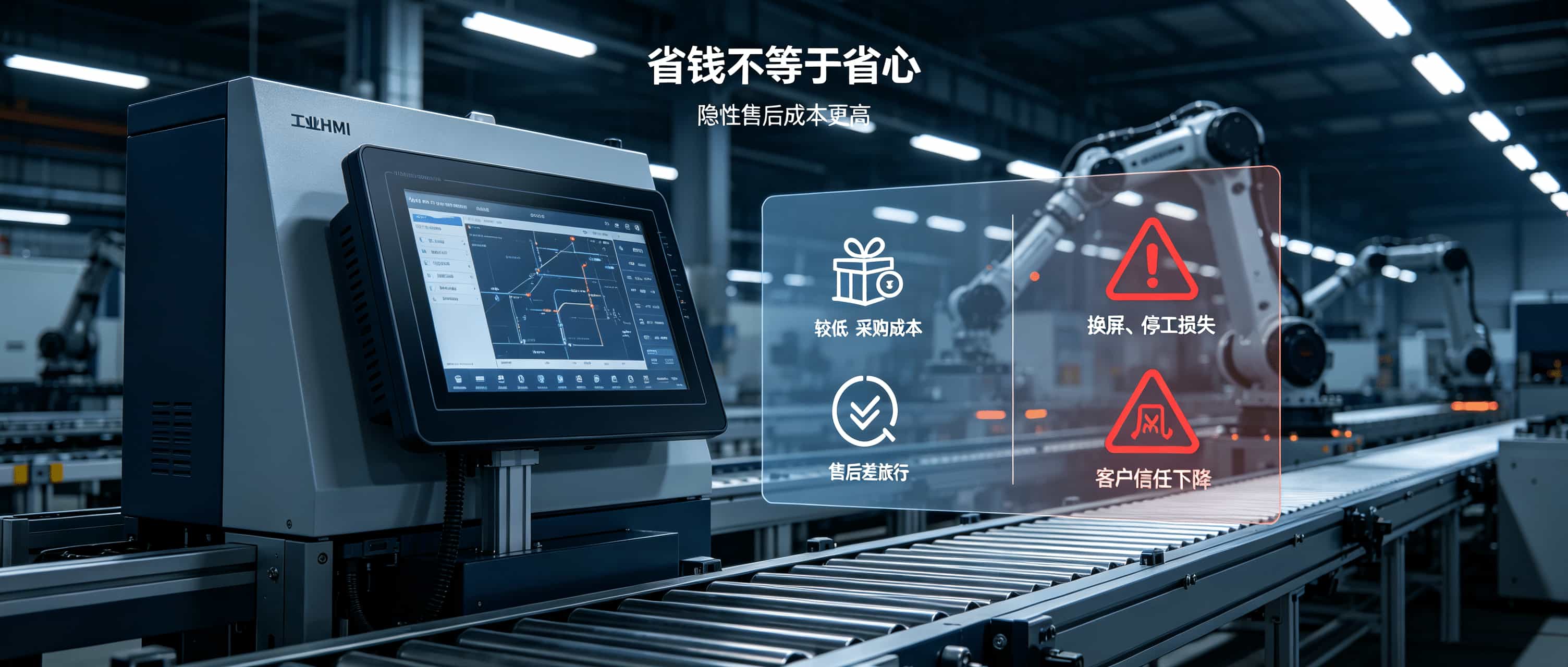
The saved material costs are far less than the implicit costs of later repairs, after-sales service, and customer complaints.
More than 60% of the selection errors we have encountered are directly related to misjudging screen parameters. The screen looks similar, but it's much worse to use.
4、 Four step precise screen selection, saving equipment three years of after-sales service
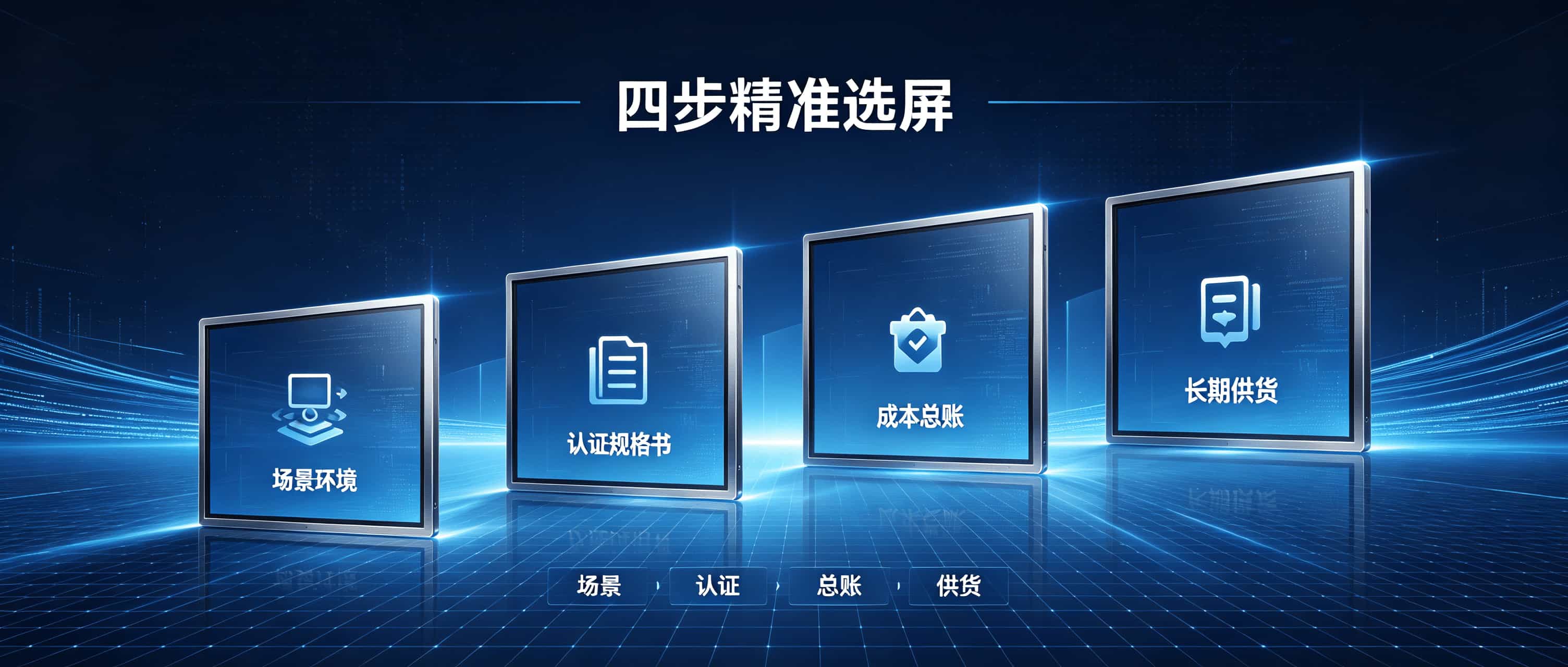
Step 1: Look at the scene and set the level
First, ask yourself three questions: Where should I put the equipment? How long do you drive every day? How harsh is the environment?
Indoor constant temperature, intermittent use, three to five years of replacement, sufficient for consumer level use. Outdoor exposure, all day operation, extreme temperature, dust vibration, must be industrial grade.
Step 2: Check certification, not verbal promises
Don't easily believe in the statement that 'meeting parameter standards is equivalent to industrial grade'. It is necessary to check whether the temperature range, backlight life, and protection level in the specification book are accurately marked.
The cost of industrial grade screens is usually 2 to 3 times that of consumer grade screens, and this price difference buys reliability. If someone sells you 'industrial grade' at a consumer grade price, you should be wary.
Step 3: Calculate the general ledger without looking at the unit price
An industrial screen is tens or even hundreds of yuan more expensive than a consumer screen. But when including after-sales costs, which one is more cost-effective, such as travel expenses, screen replacement, downtime losses, and customer loss?
Industrial grade screens are valuable in areas that you cannot see: wider temperature range, longer lifespan, and more stable supply. Calculating the entire lifecycle actually saves more money.
Step 4: Inquire about the supply and consider the long-term perspective
The equipment is not discarded after a year of use. Before selecting a screen, ask the supplier: How long can this screen last? How long is the stocking cycle? Is there an alternative solution for the shutdown?
Write it at the end
The screen looks similar, but it's much worse to use.
Indoor and outdoor factors are not just about brightness, but also the survival ability of the entire screen. The difference in winter in the north is not only the temperature, but also whether the equipment can operate normally. Running around the clock is not just about lifespan, but also about customers' trust in your brand.
Choosing the wrong screen and causing the entire batch of devices to crash is not an exaggeration, but a true story that happens every day.
Before selecting a screen next time, why not ask yourself: How many years will this screen last?
If you are worried about screen selection for a certain project, please come and talk to us.
Saishida focuses on LCD display modules, covering the full range of consumer, industrial, and automotive needs.What we often do for our clients is to turn a "similar" selection into a "just right" solution.
We accompanied you through the entire process from requirement focus, specification finalization to sample verification. After all, the working conditions of each device are different, and standardized products cannot solve all problems.
What we can do is help you use the right screen and avoid stepping on the pitfalls you shouldn't.
#Industrial LCD Screen # Consumer LCD Screen # LCD Display Module # Screen Selection # Industrial Display # Wide Temperature LCD Screen # Industrial Control Touch Screen # LCD Module Customization