


In the recent popular TV drama "Crazy Rush", there is a scene where Jia Bing plays Xu Jiang and his subordinates who go to fight Tang Xiaolong. When they see that Xiaolong has a plasma TV, they become furious and ask his subordinates to smash the TV.

Smash the plasma TV for me! What grade, it's actually the same as what I'm using.

From the Xujiang dialect, it can be heard that,Plasma TVs are not cheapTang Xiaolong definitely can't afford it, and it's not of the same grade as his own!
Well then,How much does a plasma TV really cost?
In the drama, when Gao Qiqiang went to a TV specialty store to buy a plasma TV, he was scared when he asked about the price,One unit costs 21800 yuan.
20000 plasma TVs,It's too expensive.
So here comes the question...,Why was a plasma TV so expensive in that era?
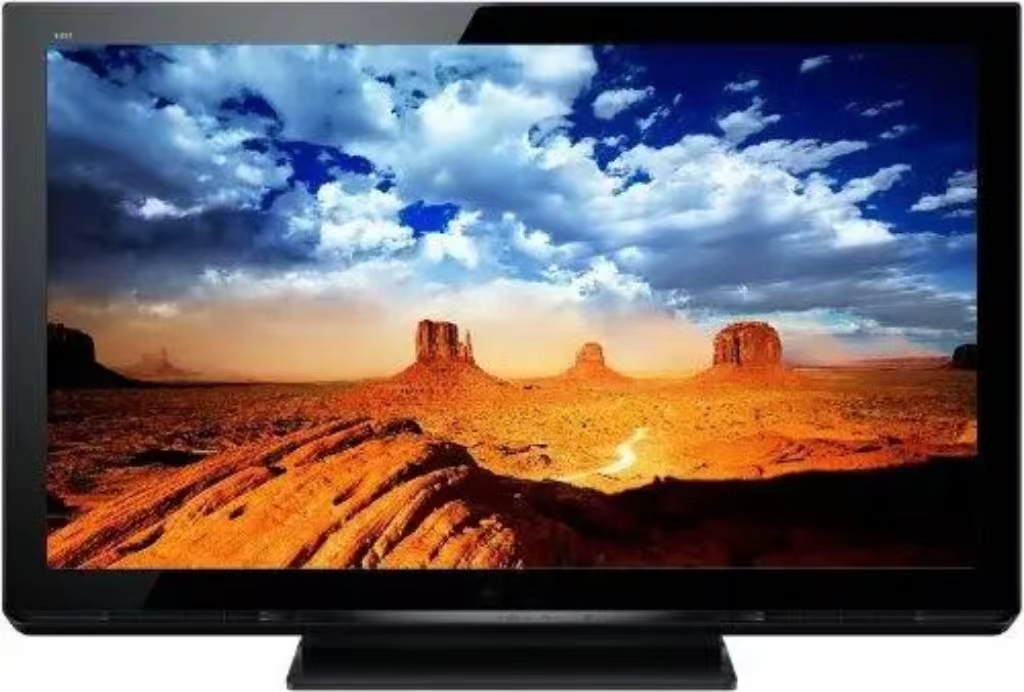
Advantages of Plasma Television
A plasma TV consists of a plasma display screen, a digital processor, a tuner, an interface board, and other components. Due to its excellent color, brightness, uniformity, viewing angle, and lightweight appearance, plasma TVs are deeply loved by people. The maximum display screen size can reach 103 inches and is widely used in public places as an outdoor display screen.
1. Plasma TVs all have pixel level self luminous technology.Each pixel emits light independently and does not require backlighting. When displaying black, there is rarely any leakage or whitening.
But compared to LCD TVs, plasma TVs have higher brightness and can enjoy large format TV programs under sunlight. They have good color reproduction performance and can provide exceptionally bright, uniform, and smooth images.
2. In addition to good display performance, plasma TVs also have the advantage of low latency.The delay time of most LCD TVs is around 10 milliseconds, and some high-performance displays can reach up to 1 millisecond. However, the delay time of plasma is in the microsecond range, and there is almost no noticeable lag when using it.
3. In addition, it also has the function of preventing electromagnetic interference.The principle of plasma television display is not related to electromagnetic fields, so external electromagnetic interference has almost no effect on plasma images. Early CRT televisions, once subjected to electromagnetic interference, would cause image tilt and distortion.
Plasma TVs are highly favored by the public due to their excellent technology and display effects, and people often say that“Outsiders buy LCD, experts choose plasma”It can be seen that plasma television holds an extraordinary position in people's hearts.
Nowadays, big data tells us that strong technology does not necessarily mean long-term development,LCD TVs have become mainstream nowadays, while plasma TVs, which were once highly sought after by everyone, are gradually being forgotten. What happened to this?
Why has a plasma TV with excellent technology become a thing of the past, as its display effect is not inferior to that of a LCD TV?
Plasma TV exits the market,Firstly, let's start with its own shortcomings. While there are many advantages, the disadvantages cannot be ignored.
1. High price and high power consumption
Firstly, the cost is too high and the price is expensive. Although the price was later reduced to around 10000 yuan, most ordinary families were deterred. The price of LCD TVs in China generally ranges from 3000 to 8000 yuan, while the price of plasma TVs has remained high, with slightly cheaper ones costing 8000 yuan or even over 10000 yuan.
Due to the fact that the pixels on the plasma display screen emit light independently, the power consumption increases significantly. The power consumption of a single display screen is much higher than 300 watts, and it is also known as the "electric tiger".
At the same time as the power is high, the heat generation will also increase. After a long standby time, touching the back of the TV will cause it to feel hot, and the overall heat dissipation effect is not ideal.
2. Easy to burn screen
After long-term use, plasma TVs are prone to screen burn-in. The so-called burn-in refers to the television staying in the same screen for a long time, and in severe cases, it may even appear black. As the usage time increases, the temperature of the internal parts and screen of the TV will also rise, and residual images may be left behind.
3. There are still industry competition issues
Plasma TVs have attracted countless fans in the market due to their display effects, and despite some inevitable drawbacks, they have not reached the point of delisting. And nowadays, electronic products are almost flawless, with some defects to some extent. However, as long as it does not affect the overall use, people will still choose tolerance and acceptance.

For example, OLED TVs suffer from screen burn-in and short lifespan, but it does not affect their status as mainstream products today. So the delisting of plasma TVs is not closely related to product defects, but rather to industry level factors.
With the continuous development of the times, larger and thinner new electronic products are constantly refreshing people's visual senses. Especially with the rise of smartphones and tablets, plasma TVs have been subjected to unprecedented challenges.
4. Plasma cannot be applied to mobile phones and tablets
Due to the rapid rise of electronic products such as mobile phones and tablets, the situation of "small screen dominance" has become increasingly apparent, and the frequency of TV usage has gradually decreased, resulting in a downward trend in sales.
In this context, plasma exposes fatal drawbacks, as it can only manufacture large-sized TV screens and cannot apply technology to mobile phones or tablets, resulting in a failure to keep up with the times. LCD TVs, on the other hand, have stabilized their market position by relying on their own advantages. They can be produced in sizes ranging from 100 inches to 1 inch, and their business scope has been expanded as a result.
5. Another important reason for decline is technological blockade
In the early stages of plasma development, plasma manufacturers led by Panasonic firmly controlled their technological advantages and upstream plasma panel manufacturing resources. In order to obtain higher profits, they did not open up and share the entire industry chain with other manufacturers. This strategy, while raising the technological threshold and gaining more profits for plasma camp manufacturers in the early stages, also caused other manufacturers to retreat.
And there is no technology blockade or monopoly for LCD TVs, allowing more manufacturers to start from scratch and develop the LCD industryWin win cooperation, continuously investing funds and technology into the LCD industry.
With the continuous advancement of technology and the improvement of processes, LCD TVs have made significant progress in color saturation, response time, contrast, and have surpassed plasma TVs in terms of clarity.
As the trend of LCD TV FULL HD approaches, plasma TV manufacturers are somewhat lagging behind. When LCD TVs began to support 1080p full HD resolution, plasma TVs were still stuck in the 720p era.
LCD TVs rely on their advantages in price, functionality, and energy efficiencyThe comprehensive performance has won more consumers' hearts, causing plasma manufacturers to retreat one after another.

With fewer and fewer manufacturers producing plasma TVs and the rapid development of LCD panel manufacturers,Slowly, plasma TVs are disappearing from people's vision and being replaced by LCD TVs.
Nowadays, LCD TVs not only have an advantage in technology, but also in price, several times cheaper than plasma TVs from more than a decade ago.
Plasma TV has gone from being highly anticipated to being eliminated by the market, and the scenes in the TV drama "Crazy Rush" have shown the rapid development of the times and technologyWe can also learn that in order for a product to keep up with the times and develop for a long time, it needs to have its own patented technology and learn to cooperate and win, meeting the current market demand.
What will be the ultimate display technology in the future? Let's wait and see!